The drivers for immigration to the US are manifold from Central American countries. Fleeing refugees running for their lives, dictatorships, gangs, oppressive governments and tyrants running the countries and poverty all have played their part. Natural disasters haven’t helped, creating further pressures on residents to find another way to support their families.
The Catholic Church and other religious communities have played a major motivation part in some of their recent histories, and the commonality of a spiritual bond creates some unity is these countries with differing histories and cultural composition.
Regardless of the reasons, each country has established their own presence now in the US. This the background to those stories of new lives and new communities now a part of the United States.
Add image for flags overlapping on US flag
Salvadoran Americans
As with much of Latin America, the relationship of the United States with El Salvador has been tenuous at best and overtly aggressive at worst, marked by neocolonialism and anti-communist interventions (Aponte, ¡Santo!: Varieties of Latino/a Spirituality, 63). Most of the Salvadoran population that currently resides in the United States arrived during or following the civil war of the 1980s and subsequent socioeconomic and political upheaval.
In recent years, immigration to the United States has continued with large Salvadoran communities solidifying in places like Los Angeles, Houston, and Washington, D.C. Salvadorans represent the third largest Hispanic population in the United States, overtaking Cubans with close to two million individuals (Cuddington, Gonzalez Barrera and Lopez, 3). Most are foreign born and less than a third are US citizens (Brown and Patten, Salvadoran ).
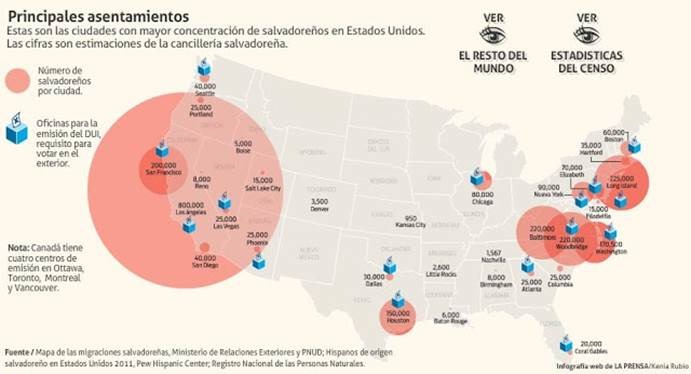 (Ministerio de Relaciones Exteriores y PNUD 2011)
Before 1960, Central American immigrants were statistically grouped and arrivals to the US were low (Medina, 120). Militarized oppression in El Salvador occurred prior to the 1980s, but peaked with death squads and disappearances, causing whole villages to flee to neighboring countries and North America. High profile assassinations like Archbishop Oscar Romero in 1980 and six Jesuit priests in 1989 created martyrs for a displaced people (Reedy Solano, 118).
In the United States, religious communities took notice of the influx and began to harbor fleeing Salvardorans and later Guatemalans in what became the Sanctuary Movement (Leavitt-Alcántara, 496). This movement provided the asylum refugees were denied by the US government, which backed the military regime in El Salvador. This movement forever changed many congregations of different denominations across the country.
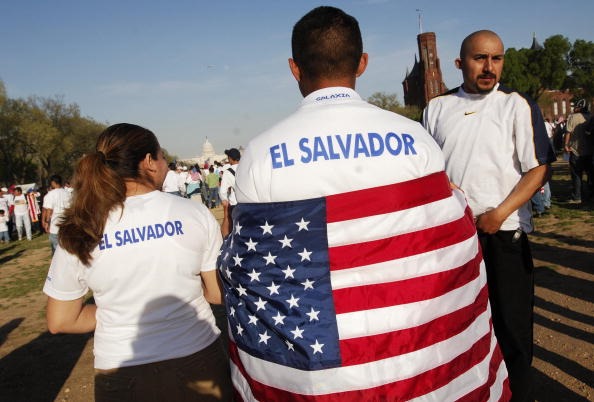
Salvadorans at an immigration rally in D.C. (Ngan 2011)
Ties to family members still in El Salvador remain strong for those in the US, enabling the exchange of both financial and cultural remittances like the 2.5 billion US dollars sent home in 2007 (Danielson, 7). International gangs born in Los Angeles like the Marasalvatruchas have also made their way back, increasing violence and sending new waves of children fleeing across boarders (Gonzalez-Barrera, Manuel Krogstad and Lopez 2014).
Of those Salvadorans in the US, there are nearly as many Evangelicals (32%) as Catholics(47%), which are more likely to be part of a charismatic renewal movement (Pew Research Center, 28). Liberation theology and Christian base communities were major influences on many Salvadoran immigrants, making community involvement and activism important parts of their spirituality. Other important aspects of their spirituality include an sense of sadness and nostalgia likened to that of the Israelites in exile (Medina, 125).
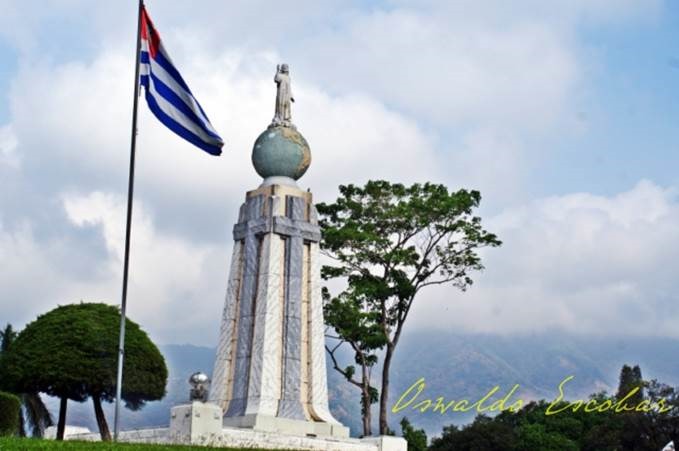
(Escobar 2010)
Saints and festivals are important aspects of Salvadoran spirituality, as are martyrs from the civil war. Among Salvadorans who are Catholic, nearly two-thirds pray regularly to saints when they face difficult moments in their lives (Pew Research Center, 54). Icons of popular religion brought to the US include Archbishop Oscar Romero and El Salvador del Mundo, their patron saint (Leavitt-Alcántara, 497). Devotion to the Virgin Mary is celebrated especially on November 21, commemorating la Virgen de la Paz, who brought peace to the country in 1682 (Cavazos-Gonzales, 573).
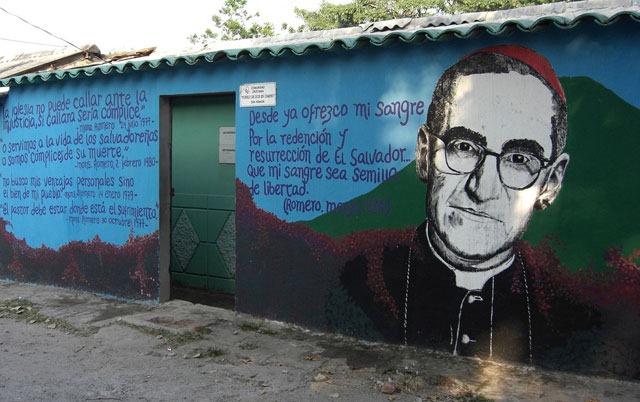
(McKellar 2011)
Almost three-quarters of Salvadorans believe people can be possessed by spirits and about half as many believe in the “evil eye (Pew Research Center, 112-113).” One in ten have sought out the services of a curandero or shaman (Pew Research Center, 115).
Guatemalan Americans
Like El Salvador and Nicaragua, Guatemala experienced much political and socioeconomic instability during the second half of the twentieth century, along with a devastating earthquake that left much of the country in ruins in 1976 (Medina, 120). US interventions include aiding in a military coup in 1954 and subsequent support for the civil war that ravaged the country for nearly four more decades with much of the violence directed at members of the twenty-three indigenous groups in Guatemala (Medina, 120-123).
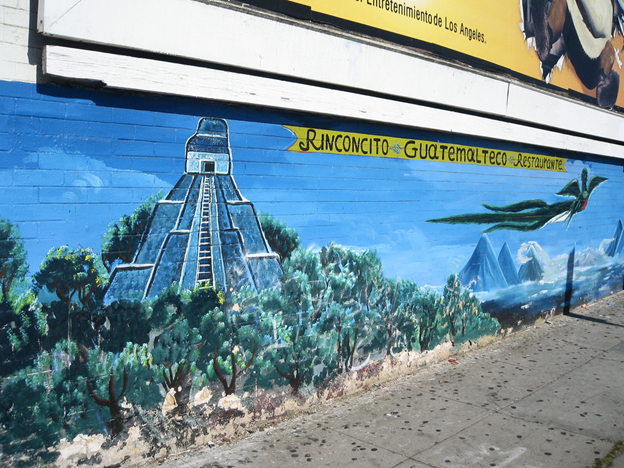
(Ewa 2007)
Most of the immigrants from Guatemala arriving in the US since 1980 have been from one of these indigenous groups, many of them reforming communities based on those groups near urban centers. For many, Spanish is a second language and an indigenous language such as Quiché, Kaq’chik’el, Chuj, Jacaltec, and Acatec are still the primary language in the home, though younger generations speak Spanish and English more readily (Medina, 124). The majority of Guatemalan Americans are foreign born with low levels of formal education and nearly a third live in poverty (Brown and Patten, Guatemalan). There are now estimated to be 1,216,000 Guatemalans living in the United States with high concentrations in California (32%) and across the South (34%), though exact numbers are difficult to come by since only a quarter are US citizens (Brown and Patten, Guatemalan).
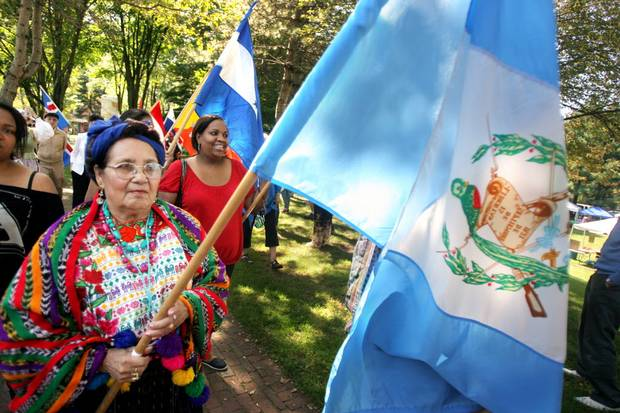
(Dickerman 2014)
Along with other Central Americans immigrating to the US in the 1980s and 1990s, Guatemalans were taken in by religious communities participating in the Sanctuary Movement, especially in California with churches and pastorates like La Placita providing refuge for undocumented immigrants (Badillo, 200). Many of these religious communities became much more engaged in community organizing and activism as immigrants from Guatemala, El Salvador, and Nicaragua were accustomed to organizing and “often expected churches to be involved in actively confronting societal injustice (Badillo, 200).”
Guatemalans in the United States practice a wide variety of religious traditions, with Catholicism and Pentecostal traditions being the most prevalent. Even within these traditions, many indigenous practices and beliefs are preserved or expressed by means of syncretism (Medina, 129). Most of the diversity of religious practice in the US is also present in Guatemala from which Protestants and Evangelicals have even begun sending missionaries to the US to serve Guatemalan immigrants in their new communities (Espinosa, 432).
Common religious practices among Catholic Guatemalans include participation in cofradías (guilds) and fraternidades (fraternities) that provide community for members and are usually organized around a specific tradition or service (Badillo, 206). Organized participation is an important way Guatemalans recreate their communities and preserve popular religion.
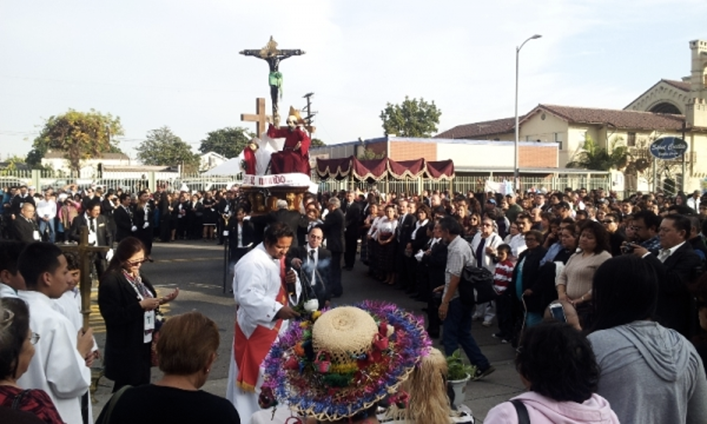
(unknown 2011)
Along with fraternidades and cofradías, the veneration of specific saints is common among Guatemalans in the US. The best know of these saints is El Cristo negro de Esquipulas (Aponte, ¡Santo!: Varieties of Latino/a Spirituality, 23). In fact, this saint is becoming popular among Latinos and other Catholics of many different backgrounds. For Guatemalans, the celebration of this saint is a source of national pride and nostalgia for immigrants and is a “annual religio-cultural magnet” as an opportunity to celebrate cultural heritage through food, music, dance, song and clothing, also an opportunity to educate others about presence and culture (Reedy Solano, 133). This second most popular Catholic icon in Latin America, resonates deeply with indigenous populations (Reedy Solano, 134). This is the Christ who knows their suffering, both in Guatemala and in the diaspora. Other saint celebrations include La fiesta de Santiago in San Cristobal and of San Miguel Acatán on September 29 (Medina, 129). Considered by some to be the patron saint of Guatemala, the Virgen del Rosario created by Dominican friar in 1592, is celebrated on October 7 (Cavazos-Gonzales, 573).
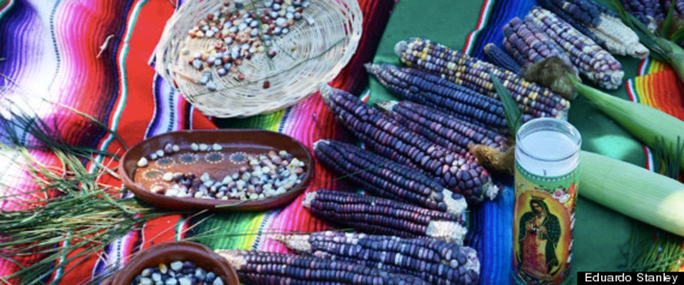
(Stanley 2013)
Indigenous festivals celebrated include los hombres de maíz, which is connected with the ancient Mayan religious beliefs and practices that humankind was created from corn as told in the Popol Vuh, the sacred stories of the Maya. In some communities there are tensions between indigenous traditions and Christian practices and often, indigenous traditions are practiced more privately (Medina, 129).
Bibliography
Aponte, Edwin David. ¡Santo!: Varieties of Latino/a Spirituality. Maryknoll, New York: Orbis Books, 2012.
Brown, Anna, and Eileen Patten. Hispanics of Salvadoran Origin in the United States, 2011. Demographics, Pew Hispanic Center, Pew Research Center, Washington, D.C.: Pew Research Center, 2013.
Cavazos-Gonzales, Gilberto. Virgin Mary. Vol. 2, in Hispanic American Religious Cultures, by Miguel, ed. De La Torre, 567-577. Santa Barbara: ABC-CLIO, 2009.
Cuddington, Danielle, Ana Gonzalez Barrera, and Mark Hugo Lopez. Diverse Origins: The Nation’s 14 Largest Hispanic-Origin Groups. Demographic, Pew Hispanic Center, Pew Research Center, Washington, D.C.: Pew Research Center, 2013.
Danielson, Robert. “A Transnational Faith: El Salvador and Immigrant Christianity.” The Asbury Journal (Asbury Theological Seminary) 66, no. 2 (2011): 4-17.
Gonzalez-Barrera, Ana, Jens Manuel Krogstad, and Mark Hugo Lopez. DHS: Violence, Poverty, Is Driving Children to Flee Central America to U.S. Demographics, Pew Hispanic Center, Pew Research Center, Washington, DC: Pew Research Center, 2014.
Leavitt-Alcántara, Salvador. Salvadorans. Vol. 2, in Hispanic American Religious Cultures, by Miguel, ed De La Torre, 496-498. Santa Barbara: ABC-CLIO, 2009.
Medina, Nestor. Central Americans. Vol. 1, in Hispanic American Religious Cultures, by Miguel, ed De La Torre, 120-130. Santa Barbara: ABC-CLIO, 2009.
Pew Research Center. The Shifting Religious Identity of Latinos in the United States. Demographics, Washington, DC: Pew Research Center, 2014.
PNUD, Ministerio de Relaciones Exteriores y. “Mapa de las migraciones salvadoreñas.” Pew Hispanic Center, Registro Nacional de las Personas Naturales. Hispanos de origen salvadoreño en Estados Unidos 2011. Washington, DC: http://mediacenter.laprensagrafica.com/infografias/i/eua-el-pais-con-mas-salvadorenos-en-el-mundo , 2011.
Reedy Solano, Jeanette. The Central American Religious Experience in the US: Salvadorans and Guatemalans as Case Studies. Vol. 2, in Introduction to the U.S. Latina and Latino Religious Experience, by Hector Avalos, 116-139. Boston: Brill Academic Publishers, 2004.
Hondurans immigrants
History and presence in the USA
(Gladney Booted from Honduras 2012)
During the turmoil of independence from Spain and the founding of the republic of Honduras, the first Hondurans came to this country in the late eighteenth and early nineteenth centuries. However, since there has been a minor immigration wave, never exceeding a few thousand people. The turbulence surrounding the 1956 succession dilemma also provoked many Hondurans to migrate to the United
States. (Maxwell 2014)
(Entertainment 1980)
The last 40 years would see a revolving door leadership between the military- and civilian-elected governments. The situation in Honduras continues to be a product of its past. Political instability is still one of the country’s major problems. Throughout the 1980s, for example, the war on Nicaragua’s revolutionary Sandinista government by the United States, using Nicaraguan Contra rebels stationed and trained in Honduras near the Nicaraguan border, threatened to embroil Honduras itself in a war with Nicaragua. (Maxwell 2014)
Size of Hondurans in US and its geographical location

The Hispanic Trend Project done by the Pew Research shows that the Hondurans rank in the number 9 of the 14 largest U.S. Hispanic groups. Honduras population is about 702,000 according with the 2011 Hispanic Origin Profiles. (Pewhispanic 2013)
However, because many Honduran Americans are migrant farm laborers and their number is difficult to measure since many of them are undocumented residents.

(Permanent Resident Card 2014)
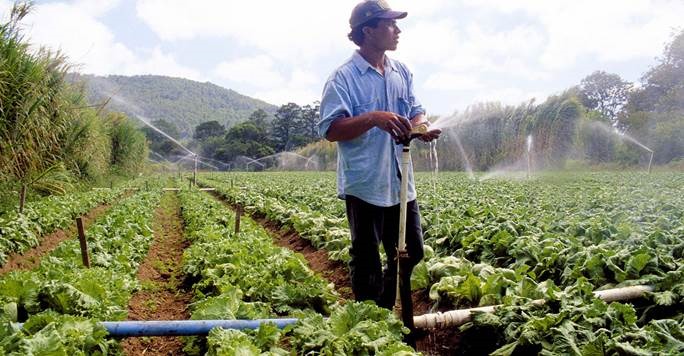
A Honduran worker in the market field (Peraza n.d.)
The 1990 Census records 1,272 working-age people in farming, forestry, and fishing operations, but by all accounts, the actual number is much higher. Of those who have settled into a particular area, the largest numbers are found in New York City (33,000), Los Angeles (24,000), and Miami (18,000). Hondurans have followed the immigration patterns of previous groups; they first settled in the largest cities, in which they found support networks in the large Honduran American communities already present. Cities provide the most accessible market for jobs requiring the kind of basic labor skills most Hondurans possess upon arrival. (Maxwell 2014)
Spirituality
An overwhelming majority of Hondurans are Catholic. The church exerts less influence than in the past. Honduran Americans are active in their church communities, and women take major responsibility for church affairs, such as attending Sunday church suppers and helping to organize parish charity drives. (Maxwell 2014)
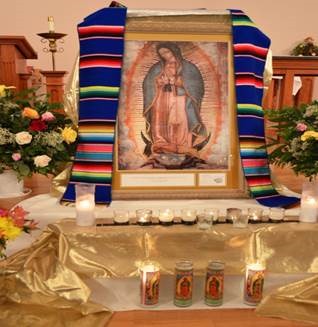 |
(Our Lady of Guadalupe Image Brings Grace to St. Mary’s 2012)
The devotion to the Virgin Mary is not exclusive to Mexicans and Mexican-Americans or those residing in Mexico. It is an aspect that people from other national origins have within their culture and religion. Aponte mentions the historian and cultural anthropologist, Elaine A. Peña. Peña studied manifestation in pilgrimages that take place in Chicago. As expected, Peña identified almost identical aspects in the transnational dimension of the devotion to the Virgin of Guadalupe. Peña states, “On a crisp fall day in a northwest suburb of Chicago, Mexican, Salvadoran, Guatemalan, and Honduran Guadalupanas/os gathered in the gymnasium-cum-sanctuary at the Second Tepeyac of North America-a sanctioned replica of the hill in Tepeyac in Mexico City.” This devotion is also practice daily in the lives of Hondurans when they visits the visit the shrines of the Virgin of Guadalupe. (Aponte 2012, 121)
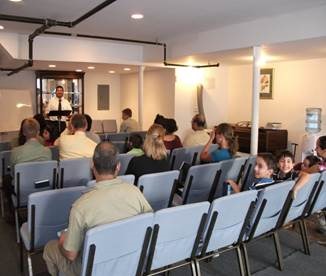
Yet, the move to the United States has brought with it a new phenomenon for the Honduran community. More and more Honduran Americans are exploring Protestant religions, with a sizeable number converting.
(Glenda 2012)
Particularly popular are the storefront churches opening across the country. These storefront churches allow virtually anybody to take an active role in religion, even to become a minister. In particular the evangelical and Pentecostal churches stress energetic recruitment and a very close, equal relationship between minister and flock. Storefront churches are a common sight in Latin neighborhoods across the Northeast. In New York, they can be found in Jackson Heights, Queens, and in the Lower East Side of Manhattan. The worship service, especially in Pentecostal churches, is typically very high-energy, with the reverend building to a shouting rant and the congregation responding in turn with a unified “amen.” Sometimes, a parishioner will collapse in a type of “seeing” trance and experience a religious epiphany or rebirth. Such worship links Pentecostals closely to southern evangelical Baptists. (Maxwell 2014)
Bibliography
The Daily Bastardette. Gladney Booted from Honduras. 2012.
Parish Gooks. Our Lady of Guadalupe Image Brings Grace to St. Mary’s. Knoxville, 2012.
Aponte, Edwin David. Santo Varieties of Latino/a Spirituality. New York: Orbis Books, 2012.
Entertainment, Sony Music. The Clash Sandinista. Fanart.tv, UK.
Glenda. “Store Front Church.” Ministerio Cristiano “El Pacto de Gracia”. Ascribelog. Midwest United States, 2012.
Maxwell, William. Everyculture. 2014. http://www.everyculture.com/multi/Ha-La/Honduran-Americans.html (accessed October 14, 2014).
Peraza, Jose Antonio. TechnoServe Honduras. Honduras. n.d.
“Permanent Resident Card.” U.S. Department of Green Card. Live & Work in USA. USA, 2014.
Pewhispanic. June 13, 2013. http://www.pewhispanic.org/2013/06/19/hispanic-origin-profiles/ (accessed October 11, 2014).
Nicaragua immigrants
History and presence in the USA
Nicaragua has had a extensive history of dependence from the early days of Spanish colonization. However, despite this reliance on other nations or rulers for its future, Nicaraguans have a deep well of national pride and resilience. (Walker 2003, 5)
This ended in 1978 when the people rose up in civil revolt and overthrew the ruling dictatorship. The cost was 50,000 lives.
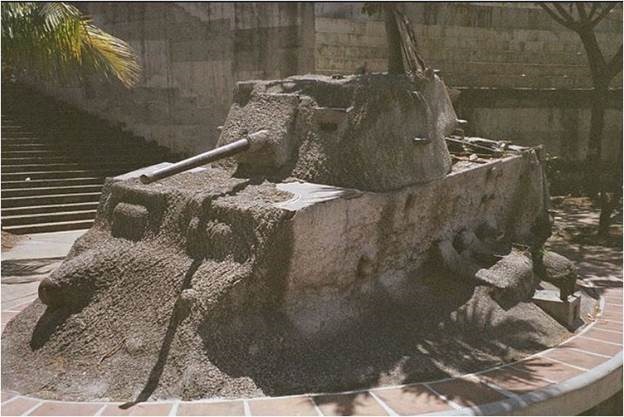
The reconciliation process which followed created a “new birth” for the country, and memorials like the “Tank in concrete” from photographer Derek Blackadder illustrates the success of this process, showing their ability to forgive and memorialize very recent and painful events. (Blackadder 2007)
Why they immigrated
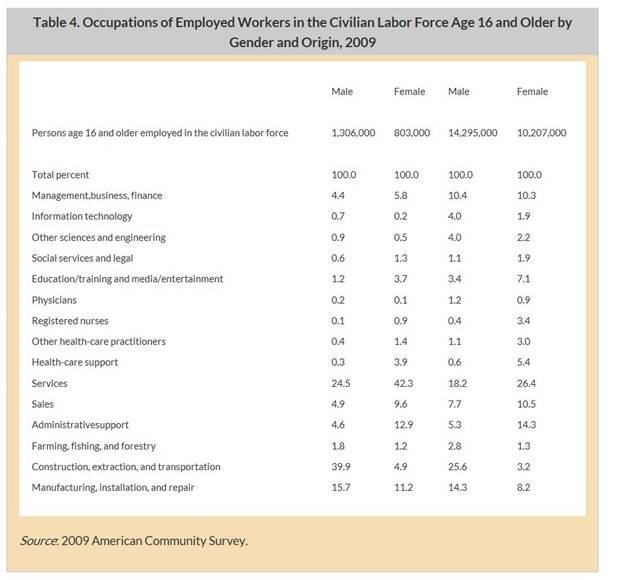
Nicaragua is the second poorest country in Central America, so improving economic status has been a major driver for those relocating to the USA. Most immigrants now in the US are employed in non-skilled/manufacturing labor activities, with Services, Sales, Administration and manufacturing making up 58% of the job activities. (Survey 2009)
Nicaraguan immigrant worker profiles in the USA, 2009
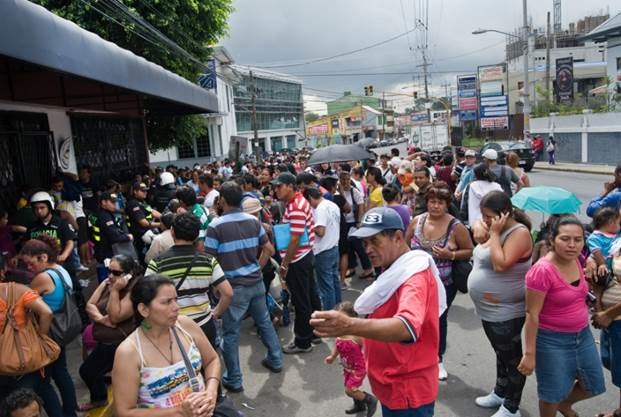
Numerous reasons make up why Nicaraguans have left their homeland. Poverty, gang violence and (Dialogue n.d.) and civil war have all be contributors in the past, today violence is the major reason according to José Luis Rocha quoted in the Tico Times (Dyer 2014). Interestingly enough migration to Costa Rica has been higher than the US, and often a stopping point along the way. (Dyer 2014).
Nicaraguan immigrants in Costa Rica
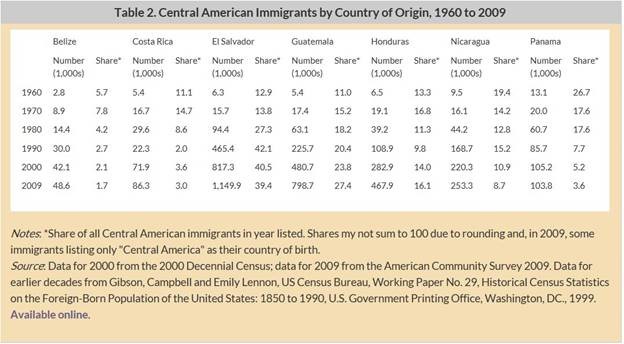
Central American immigration by Country of Origin, 1960-2009
Nicaraguan immigration to the USA has been doubling decade by decade, but is still at a much lower percentage rate than other Central American countries over a similar period. (Survey 2009)
The Nicaraguan population (395,000) is largely foreign born fully half of them are US citizens. (Anna Brown 2011) Located mainly in the south, Florida, the West and California are the major population centers in the US.
Spirituality
The majority of immigrants are Catholic, but an increasing number are Protestant, (Moravian) Pentecostal and evangelist denominations. (Need citation here)
The Catholic Church had an unusual hands-on role in the revolution, making social change happen in a very proactive way that led to the downfall of the government in the ensuing civil war. For this reason and the traditions of the Catholic Church have significant meaning for Nicaraguans in the US.
There are major festivals which dominate the religious calendar in Nicaragua, and these festivals and events which include the celebration of the patron saints in most towns and cities. (Citation to be added) These include processions, fireworks and food. However, while these traditions are important, they have not been replicated in the US. Rather immigrants keep the traditions alive by displays of saint figurines in their home.
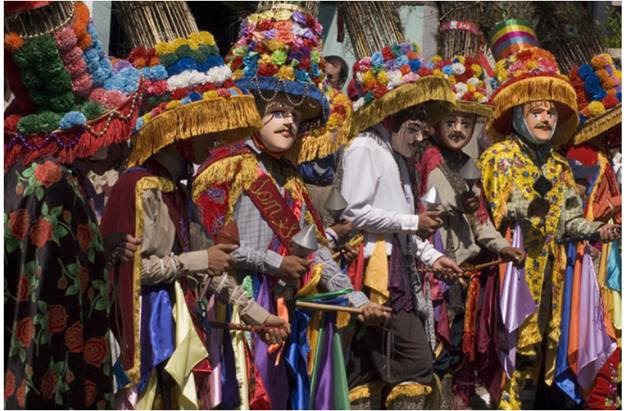
Celebrations in Nicaragua … some did not translate to US soil for immigrants.
Particular saints and days of note in their calendar are James the Great (patron saint of laborers), which is a tradition going back to Spanish colonization, St. Dominic and the Day of the Dead. (Add photograph of Day of the Dead celebration)
Saints are viewed by Nicaraguans as intermediaries between them and God, who can act on their behalf, therefore important to their spiritual life for this reason.
The Blessed Virgin Mary has a special place in their heart with the feast of the Annunciation in the feast of the La Purisimia. (Citation to be added) As the patroness of Nicaragua, shrines are built in the home honoring her during this period, with her at the center.
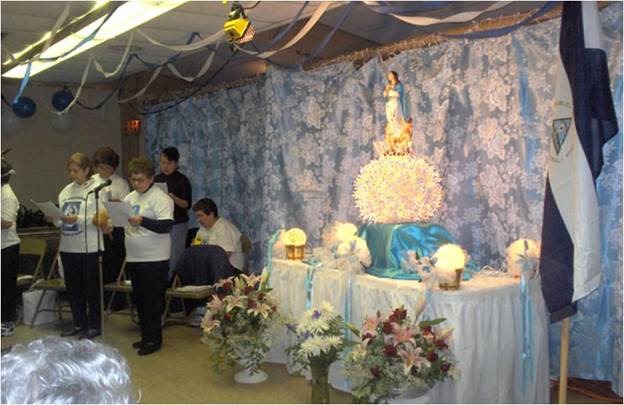
La Purista celebration in New Orleans.
Families and friends gather at this time, offering prayers, songs and a meal of traditional Nicaraguan food. In the US, immigrants have toned down the celebration excluding the prayers and song, but keepings the other tradition alive. (Immigration in the US … Citation needs completion n.d., xxx) . Easter remains one of the most important celebrations in the calendar.
Nicaraguans live out their spirituality in a vibrant and exciting way, integrating traditions, food, devotions, fun and prayer all with great gusto. Since the revolution, some say that Nicaragua and its people have been reborn. This spirit of rebirth is a good description for their view of the world.
Bibliography
Anna Brown, Eileen Patten. 2011. Hispanics of Nicaraguan Origin in the United States, 2011. Washington, DC.
Blackadder, Derek. 2007. Untitled Photograph. March 7.
Dialogue, Inter-American. n.d. “Central American Immigration.”
n.d. Immigration in the US … Citation needs completion. ABC-CLIO.
OP, Clare Wagner. 1985. “New Wine, New Wineskins: Gospel Life in Nicaragua.” Spirituality Today Vol 37.
Rocha, Jose Luis. n.d. “Envio.”
Survey, American Community. 2009. Central American Immigrants by Country of Origin, 1960 to 2009.
n.d. “Tico Times.” The Tico Times. http://www.ticotimes.net/2014/08/27/nicaraguan-migrants-dont-follow-other-central-americans-to-us-choosing-costa-rica-instead.
Walker, Thomas W. 2003. Nicaragua: Living in the Shadow of the Eagle 4th Edition. Boulder, CO: Westview Press .
 Daily prayers and meditations